

The History of Our Order
The
Order
was
founded
around
1118
to
protect
pilgrims
and
Christian
communities
in
the
Holy
Land,
known
as
Outremer,
meaning
"beyond
the
sea".
Initially
led
by
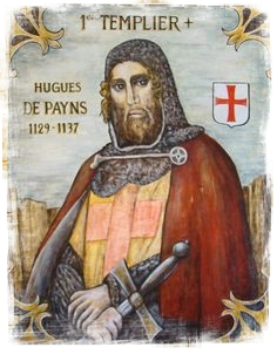
Grand
Master
Hugues
de
Payens,
its
members
were
known
as
the Poor Knights of Christ and took vows of poverty, chastity, and obedience.
Recognising
their
role
in
protecting
Christianity,
King
Baldwin
II
of
Jerusalem
gave
them
headquarters
at
the
Temple
of
Solomon
on
Temple
Mount.
From
this base, they became known as the Order of the Temple.
These
"Warrior
Monks"
were
both
fighters
and
men
of
prayer.
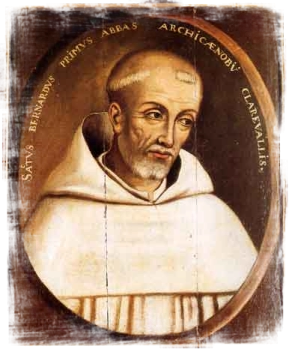
Abbot
Bernard
of
Clairvaux
supported
their
cause
with
his
book
"In
Praise
of
the
New
Knighthood"
and
gave
them
a
Rule
to
follow.
Each
Templar
pledged
loyalty
to
this
Rule.
Their
courage
and
military
successes
earned
them
respect
across
Christendom.
Their
white
mantles
with
red crosses easily identified them.
By
the
mid-twelfth
century,
they
had
become
a
powerful
force
in
Europe
and
the
Holy
Land,
whilst
answering
only
to
the Pope.
For
two
centuries,
the
religious-military
Order
of
the
Templars
defended
Christianity
against
threats.
Known
for
their
fortified
strongholds
and
battlefield
victories,
they
often
fought
at
the
front
of
Crusader
armies,
supported
by
notable
figures
such
as
King
Richard
I
of
England,
"the
Lionheart".

Known
as
warriors,
they
were
also
respected
for
their
devotion
to
God.
By
the
fourteenth
century,
individual
Templars
lived
simply
under
St
Bernard
of
Clairvaux's
strict
Rule,
whilst
the
Order
gained
significant
power
and
wealth.
This
influence
spread
into
finance
and
commerce,
attracting envy.
In
1307,
King
Philip
IV
of
France
ordered
the
arrest
of
all
Templars
in
France
on
charges
of
heresy
after
borrowing
heavily
from
them
but
failing
to
repay
his
debts.
Having
already
persecuted
Jews
and
seized
their
assets,
he
now
sought the
alleged Templar treasures believed to be
stored in Paris.
News
leaked
about
Philip's
plan
to
arrest
all
Templars
on
Friday,
13
October
1307—leading
to
superstition
around
'unlucky'
Friday
the
Thirteenth—prompting
many
to
flee
La
Rochelle
with
a
fleet.
When
authorities
raided
the
suspected
treasury
location,
expecting
enormous
riches,
they
found
only
empty
rooms
with
some
furniture;
the
treasure
had vanished without a trace.
Under
torture,
many
Templars
confessed
falsely.
Pope
Clement
V,
pressured
by
Philip
IV,
eventually
disbanded
the
once
mighty
order
entirely by decree in 1312.













© OSMTH England 2026


OSMTH and the Grand Priory of England is a chivalric non-denominational Christian
organisation whose objects are the Christian values of Faith, Hope, and Charity.
We are not a political organisation, are not associated with any political
organisation and have no political aims or ambitions.
We emphatically denounce all those who seek to besmirch the honourable
reputation of the Knights Templar for any political, subversive or unlawful activity.

We proudly commit to uphold the Armed Forces Covenant and
support the Armed Forces Community. We recognise the
contribution that Service personnel, both regular and reservist,
veterans and military families make to our organisation,
our community and to the country.